
What If the Opportunity Exists, But You Cannot Reach It?
A job vacancy is posted online.
A scholarship application opens.
A training programme announces registration.
A grant opportunity becomes available.
But what happens if the person who needs that opportunity does not have reliable internet, a computer, enough data or the digital skills needed to apply?
The opportunity exists, but access becomes the barrier.
This is one of the challenges that the Mvungi Community Hub Network is designed to address.
The idea is straightforward: bring digital employment, education and economic opportunities closer to communities, particularly people who face difficulties accessing online services independently.
What Are Mvungi Community Hubs?
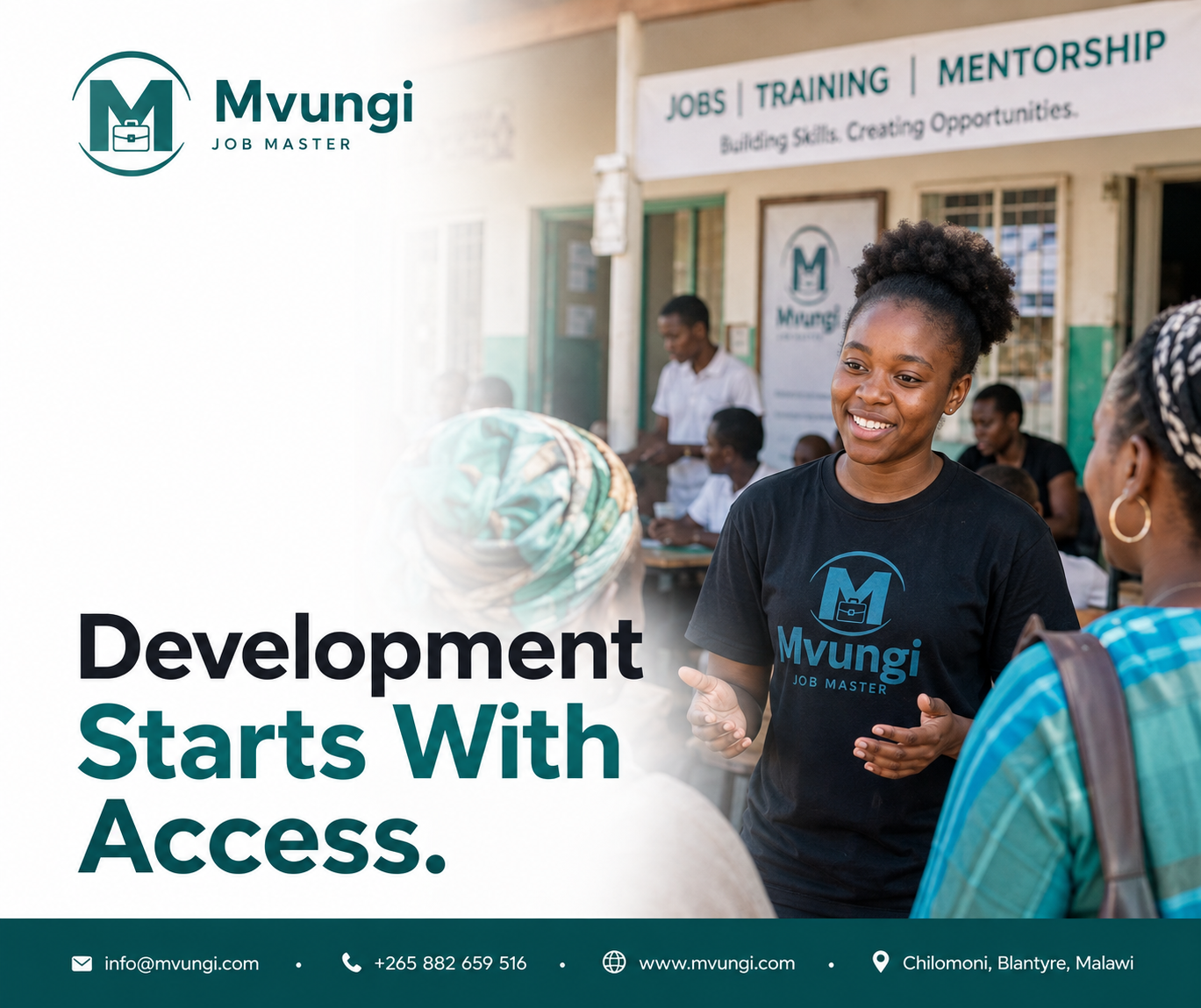
Mvungi Community Hubs are being developed as local access points where people can receive practical assistance with digital and employment-related services.
Depending on the location and available partnerships, a hub can support activities such as:
Searching for job vacancies.
Preparing and submitting job applications.
Creating or improving CVs and cover letters.
Finding internships and training opportunities.
Discovering scholarships and grants.
Accessing career development resources.
Developing digital skills.
Connecting skilled workers with potential customers.
Accessing other relevant online services and information.
The objective is not to replace existing institutions or employment platforms. It is to create a local connection between communities and the opportunities already available through digital channels.
Why This Matters for Job Seekers
Job searching increasingly involves technology.
Vacancies may be published online, applications may need to be submitted electronically, and employers may communicate with candidates through email or digital recruitment systems.
For someone with reliable internet and a suitable device, this process can be relatively straightforward.
For someone without those resources, it can be much harder.
A person may have the required qualification but struggle to upload a CV.
A graduate may know about a vacancy but be unable to complete the online application.
A student may find a scholarship but lack access to the documents or internet needed to apply.
A skilled tradesperson may have valuable abilities but no practical way to market those services online.
Community-based digital access can help reduce these barriers.
Supporting Young People Across Malawi
Young people are searching for employment, internships, training and ways to build sustainable careers.
Some are university graduates.
Others have technical or vocational qualifications.
Some have developed practical skills outside formal education.
What they often need is not only information, but assistance turning information into action.
A community hub can help someone understand where to look for legitimate vacancies, prepare professional documents and navigate online application processes.
It can also introduce young people to opportunities they may not have encountered through their immediate social networks.
The goal is to make the job-search process more accessible without creating unrealistic expectations about employment.
A hub cannot guarantee that someone will get hired. It can, however, help remove some practical obstacles that stand between a job seeker and an opportunity.
Beyond Jobs: Scholarships, Grants and Training
Employment is only one part of economic and personal development.
Students need access to scholarships.
Graduates may need internships.
Entrepreneurs may be looking for grants or business programmes.
Young people may need skills training before they are ready to compete for employment.
These opportunities are often spread across different organizations and websites, making them difficult to discover consistently.
Community hubs can provide a place where people can learn about relevant opportunities and receive help navigating the application process.
The emphasis is on access and support, not promises of selection.
A scholarship still has eligibility requirements.
A grant still has a competitive application process.
An internship still depends on the organization offering it.
The hub simply helps people get closer to those opportunities.
Connecting Skilled Workers With Customers
Not everyone is looking for a conventional office job.
Malawi has thousands of people earning a living through practical skills and services.
Carpenters, electricians, plumbers, mechanics, builders, welders, tailors, technicians, hairdressers and other service providers can have valuable skills without having a strong online presence.
Mvungi's Workforce Marketplace is intended to help make such skills more discoverable by connecting skilled individuals with people or organizations looking for their services.
Community hubs can help workers understand how to create professional profiles and participate in digital marketplaces.
This creates another pathway from skills to economic opportunity.
Digital Skills Are Part of the Solution
Access to a computer or internet connection is useful, but digital literacy matters too.
Someone may need help creating an email account, completing an online form, uploading a document or communicating professionally online.
For this reason, community hubs can also support basic digital skills.
These skills are useful beyond job applications.
They can help people access education, communicate with organizations, manage online services and participate more effectively in the digital economy.
Reaching Underserved Communities
The Community Hub Network is particularly focused on communities where access to phones, computers, electricity or reliable internet may be limited.
This includes rural and underserved areas where people can be geographically distant from many formal employment and digital services.
The model is not intended to assume that every community has the same needs.
One hub may focus heavily on employment services.
Another may have greater demand for digital training.
Another may work closely with local youth groups, NGOs or community organizations.
Local partnerships can therefore play an important role in determining what each hub provides.
Community Partnerships Matter
Building a useful network requires more than technology.
Community organizations understand local challenges.
Employers provide employment opportunities.
Training institutions provide skills development.
NGOs and development organizations may provide programmes and resources.
Youth groups can help reach young people.
Mvungi can provide technology, employment-related services and a platform for connecting these different participants.
No single organization can solve Malawi's employment and digital-access challenges alone.
Partnerships can make the system more useful and sustainable.
Technology With a Human Connection
There is a common assumption that digital transformation simply means putting services online.
But putting something online does not guarantee that everyone can access it.
A website cannot teach someone who has never used email how to submit an application.
An online vacancy cannot help someone who does not know where to find it.
An AI tool cannot replace the need for human guidance when someone is unfamiliar with digital systems.
This is why the community element matters.
Technology provides the infrastructure, while people provide the support needed to use it.
What a Community Hub Could Mean for One Person
Consider a young person who has completed their education but has never applied for a job online.
They may arrive at a hub with a simple question:
"Where do I start?"
They could learn how to search for suitable vacancies, prepare their CV, submit an application and practise for an interview.
Another person may have a technical skill but struggle to find customers. They could receive assistance understanding how a digital workforce marketplace works.
A student may need help finding scholarships.
An aspiring entrepreneur may be looking for a suitable grant programme.
Different people will arrive with different needs.
The common requirement is practical access to information, technology and support.
What Mvungi Is Building
Mvungi Job Master started with the goal of helping people connect with employment opportunities.
The Community Hub Network extends that mission into communities where digital access can be difficult.
The vision is to create local points where people can connect with:
Jobs.
Internships.
Scholarships.
Grants.
Training.
Skills development.
Workforce opportunities.
Digital services.
This is not about promising everyone a job.
It is about making the pathway to opportunity easier to navigate.
Building Access, One Community at a Time
Malawi's digital economy will not grow simply because more services are placed online.
People must be able to access and use those services.
That means considering the realities of communities where internet connectivity, devices, electricity, digital literacy and information access remain challenges.
Mvungi Community Hubs are being developed with this reality in mind.
The long-term vision is a network of community-based access points that help connect people to employment, education, skills and economic opportunities.
The model will continue to develop through experience, community feedback and partnerships.
But the principle remains simple:
Where digital access is a barrier, bring the opportunity closer.
If you are a community organization, NGO, youth group, training institution, employer or development partner interested in supporting digital inclusion and access to opportunities, Mvungi welcomes partnerships that can help make the network more useful to communities.
Mvungi Community Hubs: bringing jobs, skills and opportunities closer to the people who need them.
Bringing Jobs, Skills and Opportunities Closer to Communities: The Mvungi Community Hub Network
Discussion (0)
No comments yet. Start the conversation.
Leave a comment